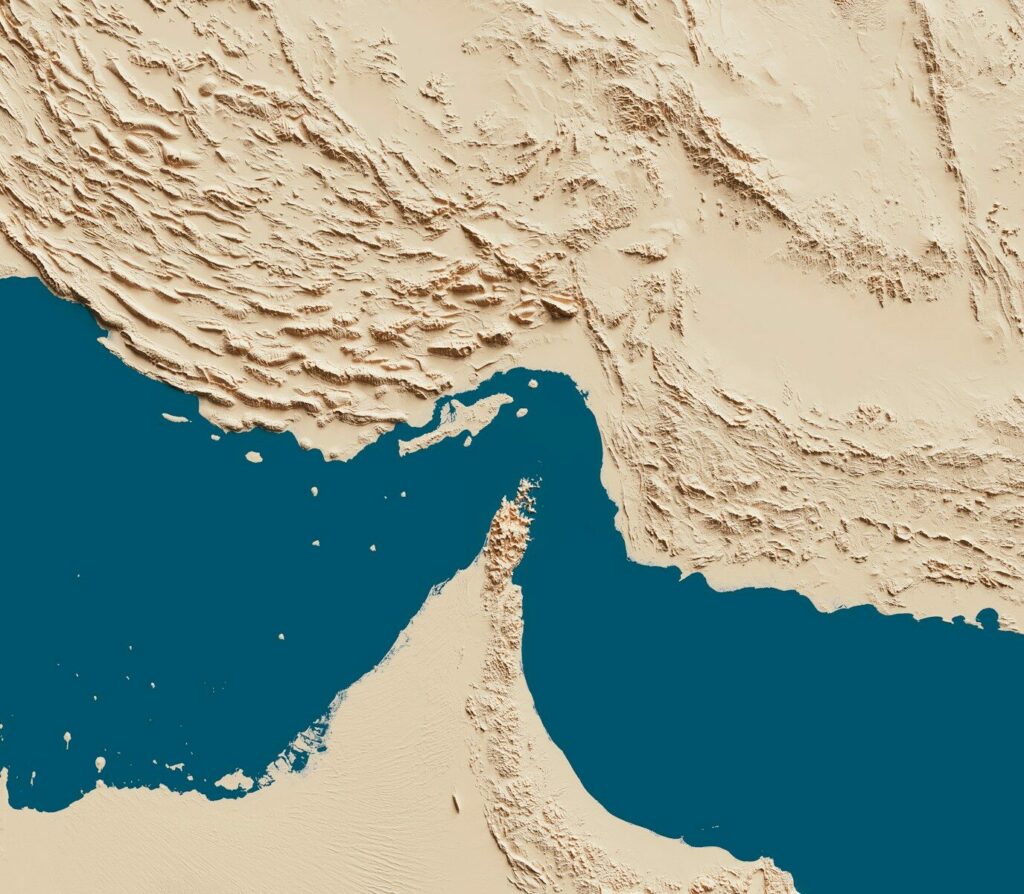
The German economy had stabilised towards the end of last year; many economic indicators developed positively. The growth opportunities for 2026 and 2027 were assessed favourably due to the fiscal spending programmes and support measures launched by the coalition government. However, with the Iran war and the resulting price shocks for oil and gas, the...
Institutional Reform and Depositors’ Portfolio Choice. Evidence from Bank Account Data
How do political and economic systems shape people’s financial behavior over the long run? Using Germany’s division and reunification as a natural experiment, this working paper analyzes unique bank account data. The results reveal that even many years after reunification, investment choices in East and...
The tension between competition policy and industrial policy in the German defense industry
With the security policy “Zeitenwende” and rising defense spending, calls for industrial policy to strengthen the domestic arms industry are increasing, while the role of competition policy receives little attention. This article analyses the specific characteristics of arms markets and empirically examines competition intensity at...
Simulation of the impact of US tariffs on Hamburg as a business location
The present HWWI study uses a CGE model to analyze the short-run effects of the current U.S. tariff regime (as of Fall/Winter 2025) on Hamburg. At the aggregate level, the impacts on GDP and employment in Germany, the EU, and Hamburg are close to zero,...
Commodity price index down in 2025
This article examines the development of the HWWI-Rohstoffpreisindex in 2025. The analysis focuses on the price dynamics of Germany’s key imported raw materials and the contributions of individual commodity groups. The overall decline of the index during 2025 was largely driven by price movements in...
HWWI Commodity Price Index rises again after decline
Over the past three months, the previously observed slight downward trend in the HWWI Commodity Price Index did not continue. Following an increase of 2.1 % in November and a decline of −1.8 % in December, the index rose markedly by 5.5 % in January...
The economic dimension of sport in Hamburg
A new study by the HWWI confirms the enormous importance of sport for the Hanseatic city. “Sport is a powerful driving force for Hamburg,” emphasized President Prof. Norbert Aust, Senator for Sport Andy Grote, and HSB President Katharina von Kodolitsch at the presentation of the...
Farewell after 20 years
After 20 years of service, our colleague Dörte Nitt-Drießelmann is leaving us to retire. Since joining us, she has reliably accompanied the development of our institute and supported it with her many years of experience. We thank her for her trusting cooperation and her constant...
New messaging system
We have modernized our messaging system for the new year and look forward to keeping you up to date on our activities. Once you have registered, you can individually select which topics and news from our institute you would like to receive in the future.
2026/2027 Economic growth of 1 1/2 % possible in each case
The German economy is waiting for the economic turnaround. As in the first half of 2025 overall, real gross domestic product stagnated in the 3rd quarter. A difficult international environment and a so far only tentative implementation of reforms by the new government – overshadowed...
Focus topics
Our regular events
On the HWWI
Hamburg World Economic Institute (HWWI) is an independent, privately financed economic research institute. In addition to the headquarters in Hamburg, the HWWI has a branch in Bremen. It is organized as a non-profit GmbH; the only shareholder is the Hamburg Chamber of Commerce. HWWI closely cooperates with Helmut Schmidt University/University of the Armed Forces Hamburg (HSU).